Fifty Years at Moose Factory


Across the Métis Homeland, Métis have used petitions as a tool to collectively protect their interests across the 1800s. From the 1840 Penetanguishene Petition in the wake of the relocation from Drummond Island to the 1882 Batoche Petition in the prelude to the Northwest Resistance and beyond, petitions were a prevalent political tool that Métis reached for to assert their distinct identity and defend their rights.
Another example from Moose Factory in 1905, where a group of Métis affirmed their kinship ties across the Métis Homeland and underscored the importance of protecting their distinctive way of life.
After being excluded from Treaty 9, Métis at Moose Factory petitioned that they “have been born & brought up in the country... ” and should therefore receive, “that scrip has been granted to the Halfbreeds of the North West Territory.” The 1905 Moose Factory Petition signatories were also acutely aware that their economic future depended on the land, stating, “should the fur traders at any point not require our services we should be obliged to support ourselves by hunting.”
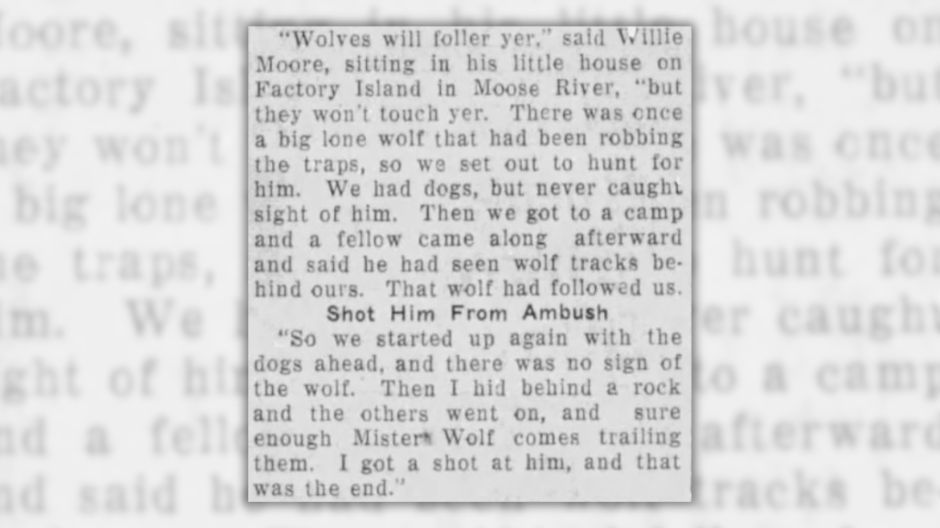
While the Crown never delivered a response to their petitions, petitioners such as William Moore and William McLeod continued to live and work in Moose Factory for many years. The deep knowledge of the land possessed by the two Métis trappers led to their interview in a 1934 article published in the Sault Star. The pair was introduced as “Willie Macleod and Willie Moore, pensioners of the Hudson’s Bay Co. who have hunted and trapped out of Moose Factory for fifty years.”
McLeod and Moore’s continued presence at Moose Factory shows the lasting importance of what the 1905 petition sought to defend. Through their work as hunters and trappers, they maintained the land-based practices and community ties that shaped Métis life at Moose Factory.
See Our Sources
Mini Word Search
Have fun with the facts by completing today's mini word search.